
50inch chicken coop fan


language
should i put a fan in my chicken coop ?
Published time:
2025-12-11 17:22

Should chicken coops have ventilation fans installed? This is a very practical and important question. The answer is: For the vast majority of large-scale or semi-intensive chicken coops, fans are not a matter of "whether to install them" but rather a critical piece of equipment that "must be installed." Whether to install fans depends primarily on the scale of farming, the type of coop, climatic conditions, and farming objectives.
1. Situations Where Vent Fans Must Be Installed (Strongly Recommended)
Large-Scale, High-Density Farming:
With a large number of chickens and high density, the body heat, moisture from respiration, and carbon dioxide produced by the chickens themselves are significant. Relying solely on natural ventilation cannot effectively expel these, leading to the accumulation of heat and harmful gases. This can cause many chickens to fall ill, affecting their growth and egg production.
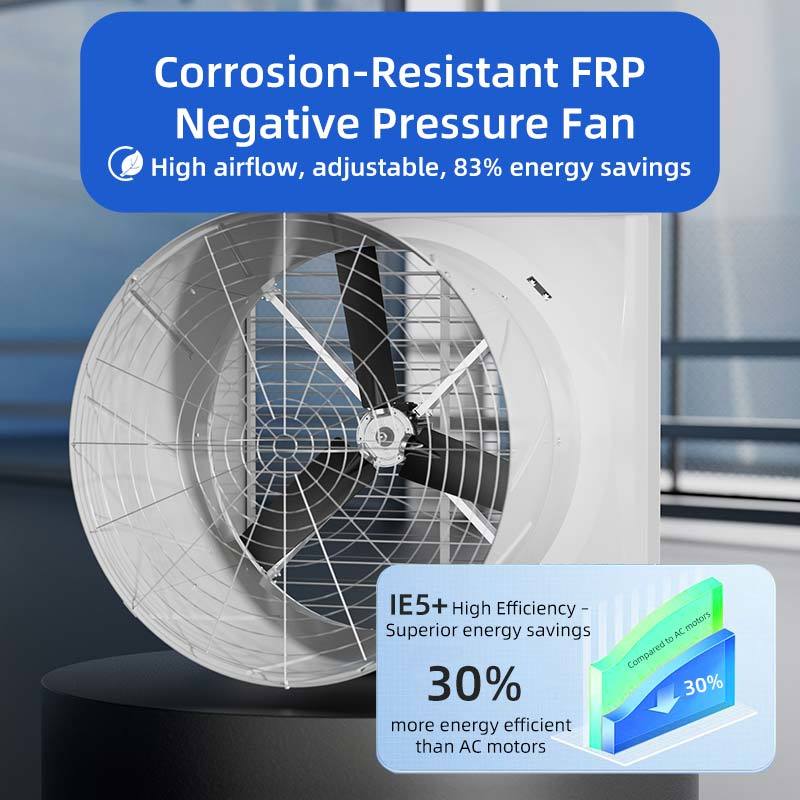
Maintex is a professional fan manufacturer that not only provides fans but also offers a complete set of solutions for livestock and poultry farming. Fans (combined with ventilation systems) provide "mechanical forced ventilation," precisely controlling the air exchange rate to ensure sufficient oxygen and expel ammonia, carbon dioxide, dust, and excess moisture.
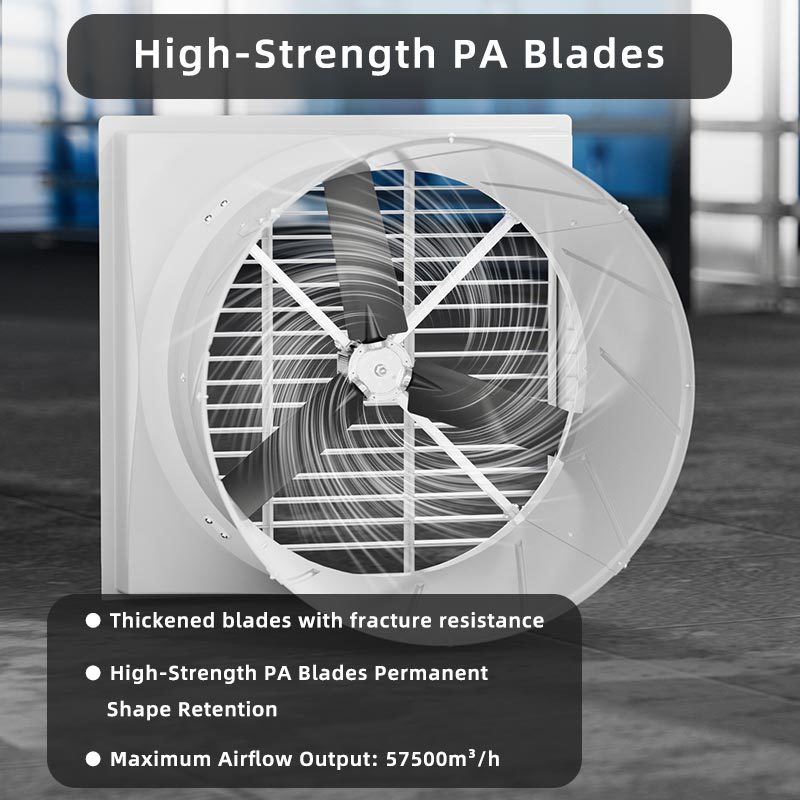
1380mm chicken coop fan

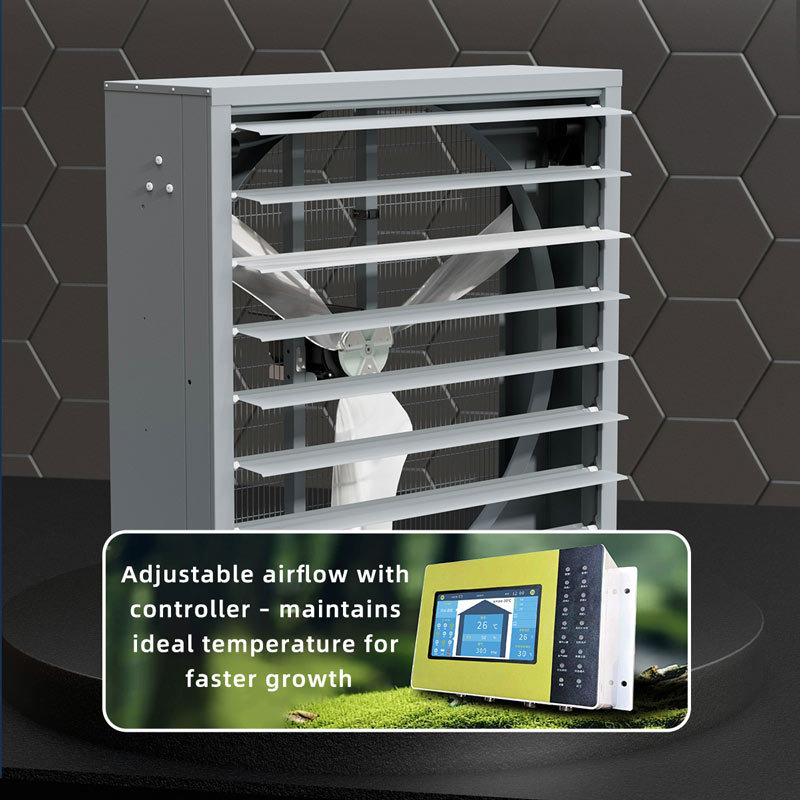
1100mm chicken coop fan
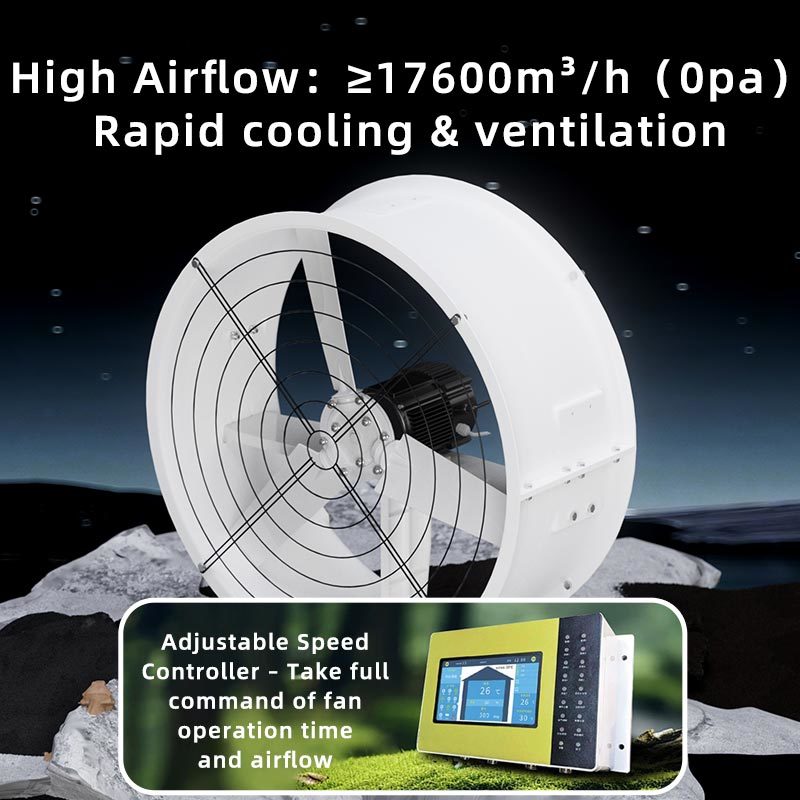
fieber glass chicken coop fan
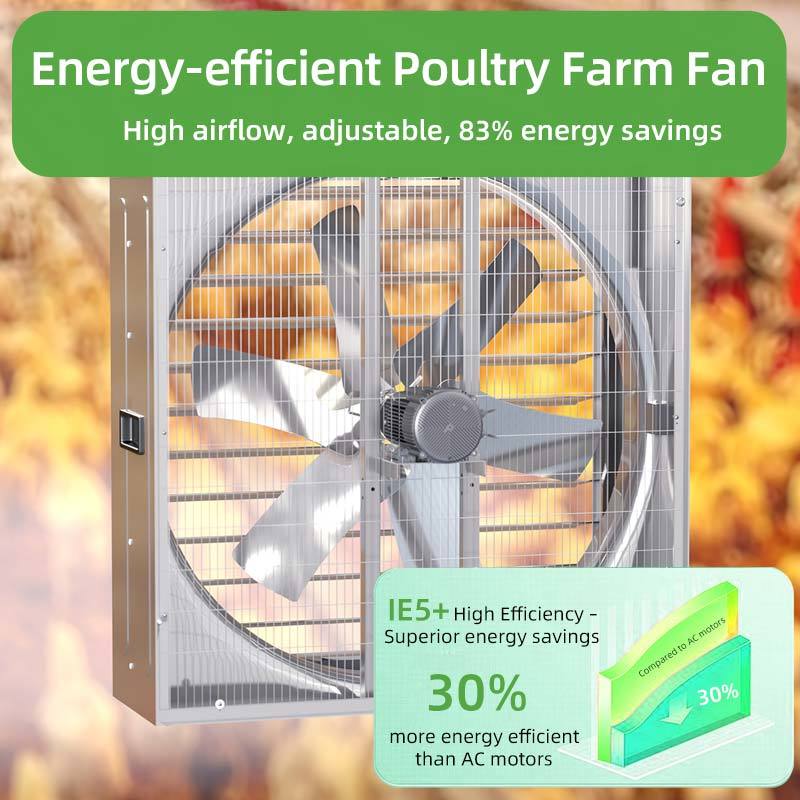
Environmental Temperature Control (Preventing Heat Stress):
Chickens do not have sweat glands and are extremely sensitive to high temperatures. When the temperature exceeds 28°C, heat stress occurs, leading to reduced feed intake, lower egg production, poorer eggshell quality, and, in severe cases, mass mortality.
Fans, combined with a "wet curtain" system, are the "gold standard" for heat relief and cooling. The fans create negative pressure, drawing in hot outdoor air, which is cooled as it passes through the wet curtains before entering the coop. This can effectively reduce the indoor temperature by 5–10°C.
Enclosed or Semi-Enclosed Chicken Coops:
To maintain warmth and protect against birds and rodents, these coops have few or no windows that can be opened widely, resulting in insufficient natural ventilation.
Fans are the "lifeline" for maintaining a healthy internal air environment, ensuring controllable ventilation under any weather conditions.
2.So, how many exhaust fans should be installed in a chicken coop to be reasonable? Next, we will discuss this in detail for coops of different scales.
Before addressing this question, we need to understand the temperature and humidity requirements for chickens at different age stages.
Chick starters | air temperature(/℃) | Relative Humidity/% | ||||
| Age (days) | Comfort Zone | Upper Critical Limit | Lower Critical Limit | Comfort Zone | Upper Critical Limit | Lower Critical Limit |
| 1-3 | 35~33 | 25 | 13 | 65 ~ 70 | 85 | 50 |
| 2-week-old | 30~28 | 27 | 13 | 60 ~ 65 | 85 | 50 |
| 3-week-old | 28~26 | 27 | 16 | 55 ~ 60 | 80 | 50 |
| 4-week-old | 26-24 | 35 | 27 | 55 | 80 | 40 |
| 5-week-old | 24-21 | 28 | 18 | 55 | 65 | 40 |
| 6-week-old | 21-18 | 26 | 16 | 55 | 65 | 40 |
3 Key Points for Summer Ventilation Design in Brooding Houses
Air Velocity Control
Air velocity through cooling pads: 1.5–2.0 m/s (surface velocity of wet pads to ensure cooling efficiency).
In-house air velocity: ≤0.5 m/s (to prevent direct cold drafts on chicks and reduce cold stress).
Ventilation Rate Calculation
Minimum ventilation rate: 0.7–1.0 m³/(h·kg) (calculated per kilogram of body weight, combined with air exchange frequency).
Cooling pad area: Should be at least 2.5 times the total exhaust fan area to meet air velocity requirements.
4.Ventilation Parameters for Different Flocks and Seasons (Comparison Table)
| Flock Type | Season | Ventilation Rate (m³/(h·kg)) | Recommended Air Velocity (m/s) | Key Objectives and Remarks |
| Brooding Chicks | Summer | 0.7–1.0 (minimum) | Pad: 1.5–2.0; In-house: ≤0.5 | Avoid direct drafts; use cooling pads |
| Pullets (H-type Cage) | Summer | -- | Tunnel: 2.0–2.5 | Combined with cooling pads; perceived temperature ≤28 ℃ |
| Layers | Winter | 0.4–0.6 (minimum) | -- | Maintain air freshness; prevent ammonia buildup |
| Winter | 0.7–1.0 (minimum) | Inlet: 3.8 | Maintain 12–15 ℃, humidity 45–60% | |
| Summer | 4.0 (maximum) | 2.5–3.0 | Combined with cooling pads; pad velocity 1.5–2.0 m/s | |
| Broilers | Winter | 0.4–0.6 (minimum) | 0.2–0.3 | Control ammonia and humidity |
| Summer | 7.0–9.0 (maximum) | 2.5–3.5 (caged: 3–4) | Combined with cooling pads/misting; higher velocity for stacked cages |
5.Ventilation Calculation Example (50,000-Broiler House)
Given Conditions:
House dimensions: Length 85 m × Width 15 m × Height 4 m
Average body weight: 2 kg
Single fan capacity: 45,000 m³/h
Air exchange rate: 60 times/h
| Calculation Method | Formula and Process | Result |
| Minimum Ventilation Rate | 50,000 birds × 0.6 m³/(h·kg) × 2 kg | 60,000 m³/h |
| Maximum Ventilation Rate | 50,000 birds × 7 m³/(h·kg) × 2 kg | 700,000 m³/h |
| Air Velocity Method | 3 m (effective height) × 15 m × 3 m/s × 3600 s | 486,000 m³/h |
| Fan Quantity | (Respiratory method) House volume × 60 ÷ 45,000 ÷ 0.6 (efficiency) | Approx. 9 fans |
| (Air velocity method) 486,000 m³/h ÷ 45,000 m³/h/fan | Approx. 11 fans |
Conclusion: The actual number of fans should be adjusted within the above results based on house structure, climatic conditions, and stocking density, with redundancy reserved.
6. Core Recommendations
Design First: The ventilation system should be planned before house construction to ensure proper matching of fans, cooling pads, and inlets.
Dynamic Adjustment: Adjust ventilation rates based on flock age, season, and real-time environmental data (temperature, humidity, ammonia levels).
Professional Consultation: For complex facilities, it is recommended to determine the solution through professional calculations. For further support, please contact:
Alisa Xie
Email:alisa.xie@maintexpt.com
Related news
Related Products

James Yang
Phone:+86 13699794382
Email:james.yang@maintexpt.com
Address: Maintex Science & Technology Park, No. 8 Kangming Rd., Pingdi Street, Longgang District, Shenzhen, China 518117